
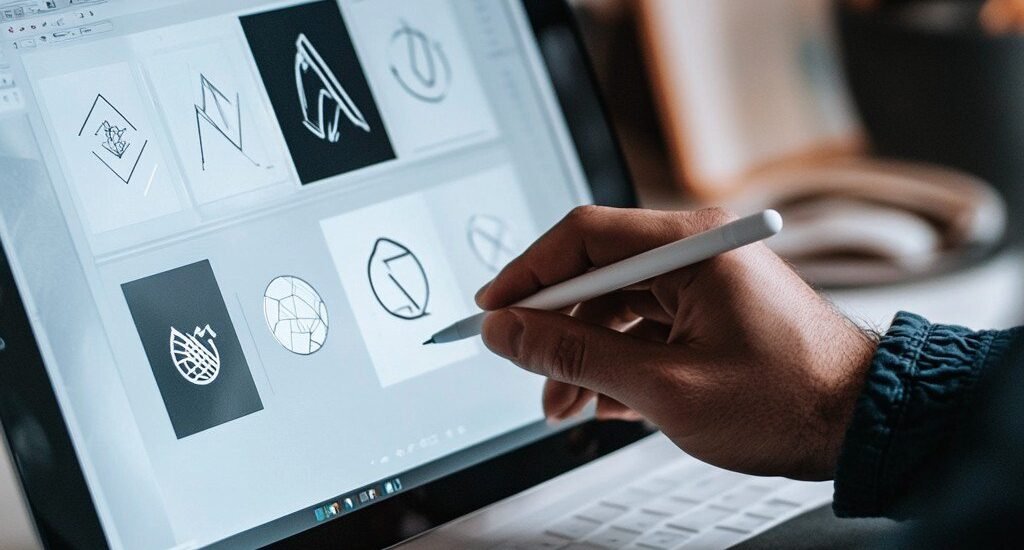

A clear logo design brief helps a designer understand what your business needs before visual concepts begin. It is not a request to dictate every shape or colour. It is a shared reference for your business purpose, audience, preferred direction, practical uses and the decisions that still need to be made.
Small businesses often use the same identity across a website, social profiles, documents, packaging or signs. Listing those uses early helps you discuss suitable layouts and file types instead of discovering requirements after a design has been approved. This guide shows what to include and offers a checklist you can adapt to your own project.
What a logo design brief should explain
A useful brief gives the designer enough context to ask better questions and explore relevant directions. It does not need to predict the final logo. Describe what your business does in plain language, who it serves, what you want customers to understand, and where the identity will be used. If something is undecided, say so rather than presenting a guess as a fixed requirement.
Keep facts, preferences and open questions distinct. A fact might be an existing business name. A preference might be a calm visual tone. An open question might be whether the logo needs a symbol as well as a wordmark. This distinction helps feedback stay focused and makes it easier to revise the brief when the project changes.
Prepare before you write
Collect the material a designer may need to understand the context: your approved business name and spelling, a short description of your offer, existing brand assets, and examples of visual styles you like or dislike. For every reference, note what you are responding to—such as the lettering, spacing, colour relationship or simplicity. A reference is inspiration, not permission to copy another brand.
Also list the places where the logo may appear. Include digital and physical uses that are relevant to your business, such as a website header, social avatar, invoice, product label or storefront sign. You do not need to request every possible variation; identify the real uses first, then agree with the designer on the deliverables that fit them.
Build the brief step by step
-
Describe the business and its audience
Write a short, factual description of what you offer and who the intended customers are. If you serve more than one audience, describe the differences without using stereotypes. Explain the problem customers bring to you and the impression you hope the brand will make. Avoid unsupported superlatives such as “the best” unless they are simply a personal aspiration, not a public claim.
-
Set the communication goal
Say what the logo should help communicate: for instance, a practical, welcoming or premium-feeling identity. Choose a few words and explain what each means to you. “Modern” can mean many things; a note about clean typography or restrained decoration gives the designer a more useful starting point. Treat these words as direction, not a guarantee of how every viewer will respond.
-
Share visual preferences and boundaries
Provide references that illustrate a mood, colour relationship or lettering style, and explain what works for you. Add a separate list of elements you want to avoid. If you already have colours or fonts that must remain, identify them and provide the source files or names if known. If you are open to exploration, say that too.
-
List intended uses and practical needs
Describe where the logo will be displayed and whether it must work on light and dark backgrounds, in a compact space, or alongside existing text. Ask the designer which layouts and file formats are appropriate for those uses. Confirm what editable source files, transparent-background versions or alternate lockups are included before the work begins; do not assume that every project includes the same package.
-
Agree on decisions and feedback
Name who will collect feedback and who will approve the final direction. Share any review dates or project constraints that are already confirmed, and label tentative dates as tentative. Decide how feedback will be gathered: point to a specific part of a concept and describe the reason for a change instead of combining conflicting opinions into a vague request to “make it pop.”
Logo design brief checklist
Before sending the brief, check that it contains the information that applies to your project:
- Correct business name, spelling and a concise description of the offer.
- Intended audience and the impression the identity should communicate.
- Existing logo files, colours, fonts or other assets that must be considered.
- Visual references with notes about what you like and what should not be copied.
- Likely uses across web, social, print, products or signage.
- Preferred and avoided visual elements, with undecided items clearly marked.
- Requested layouts, file formats and any deliverables that need confirmation.
- The person who gives consolidated feedback and approves the result.
How to review logo concepts
Review each concept against the brief rather than choosing only by personal taste. Ask whether the name is readable at the sizes you expect to use, whether the design feels consistent with the direction you described, and whether it can be adapted to the backgrounds and placements you listed. These are review questions, not a substitute for checking the actual files in their intended settings.
When giving feedback, separate essential changes from optional preferences. Explain the reason behind a request and avoid asking the designer to combine unrelated concepts without a clear goal. If a direction is not working, refer to the audience, intended impression or practical use that the brief set out. Before approving, confirm the agreed deliverables, file formats, usage rights and any trademark review responsibilities with the relevant professionals.
Common brief-writing mistakes
A brief becomes harder to use when it relies only on broad adjectives, sends unexplained reference links, or lists conflicting preferences as if they were all mandatory. It can also create confusion when the business name is not final, intended uses are missing, or several reviewers send separate and contradictory instructions. Mark unknown details openly, identify priorities, and update the brief if an important requirement changes.
Avoid treating a reference logo as a template to reproduce. Describe the qualities you value instead of asking for a close imitation. This keeps the discussion focused on your own identity and gives the designer room to propose original work.
Frequently Asked Questions
Does a logo design brief need to be formal?
No. It can be a concise document or a structured conversation followed by written notes. What matters is that the business context, preferences, intended uses and decisions are clear to everyone involved.
Should I choose the colours before contacting a designer?
Only if you already have colours that are part of your identity or a clear reason to keep them. Otherwise, describe the feeling or context you want to communicate and discuss possible palettes with the designer.
Should I include examples of other logos?
You can include references to explain a visual preference, but add notes about the specific qualities you mean. Make clear that the examples are for discussion and should not be copied.
What should I ask for when the logo is approved?
Confirm the exact files, variations, background treatments, usage rights and source materials included in your agreement. Ask which formats suit your planned uses and verify requirements directly with any platform or printer involved.
Turn your brief into a design conversation
A thoughtful logo design brief gives you and your designer a practical starting point without pretending every decision is already settled. Keep it accurate, explain your preferences, list where the identity must work, and agree on how feedback and approval will happen. If you would like to discuss a visual identity project, visit IsrainSols creative design services or contact the team.


